Showing posts with label nintendo switch. Show all posts

Tuesday, December 10, 2019

Game Review: Civilization VI (Switch)

Civilization VI is the first Civ game I've ever played, so it was a steep learning curve for me, but overall super worth it. Fragrant Husband warned me that the game would turn me into a "One more turn!" maniac, and boy was he right. The gameplay is so utterly absorbing, and the music so inoffensively epic, that I could start a turn and then look up and it's been three hours. Whoops, was it my turn to watch the kids???

For the uninitiated, Civ is like a giant board game with hexagonal tiles that consume one movement point each, and with environmental features (e.g. desert or forest) that impact your empire-building. In a basic game, the victory condition is having the highest score, out of several categories: domination (conquering a capital), science (researching technologies), culture (building Wonders, parks, resorts, etc), and religion (convert everyone!!!). You play as a great leader from history, including famous ones like Cleopatra or Gandhi, and lesser-known rulers like Jadwiga of Poland or Tomyris of Scythia. Leaders come with unique abilities, units, and infrastructure. For example, Gilgamesh can declare war without a warmonger penalty, Gorgo can produce Hoplites, and Qin Shi Huang can build the Great Wall.

Players begin in the Ancient Era, and progress through time is determined by your civilization's scientific and cultural development. The fog of war mechanic, so very familiar to those of us who played World of Warcraft, enhances the tension--what's over there? Crabs? Barbarians? Australia???

Civ VI has adorable graphics, with units updating their lewks to match the time period. For instance, Builders start out as beefy men in tunics, and later become guys in safety vests. Settlers begin with robes and a walking stick, and by the end they're putt-putting around in a van. Meanwhile, combat units can be upgraded: Archers become Field Cannons and Knights turn into Tanks. In terms of static visuals, available resources are well represented: stalks of wheat, horses, iron, a bag of tea, bars of gold, petrol, oranges, grapes, etc. all appeal to players--"Build near me so you may partake of my bounty!"

There are numerous difficulty settings: Settler, Chieftain, Warlord, Prince, King, Emperor, Immortal, and Diety. Prince is the default for single player, but you can also choose your own challenge level by creating a campaign or playing a preset scenario. There's a multiplayer option as well, and one day I shall have the courage and confidence to venture into those waters!

Civ VI can be picked up and enjoyed by total noobs, because the controls are fairly intuitive and you can have an advisor who guides you toward the best play during turns. When I first started out, I just chose whichever building or unit or technology that had her icon winking promisingly on it. I owe the few victories under my belt to her, I'm sure.

Now if only there were some way to stop the narrator from yammering automatically whenever I finish researching something or building a Wonder...

In closing, Civ VI is a strong game with high replay value, especially with the optional scenarios and customizable difficulty levels. Every campaign presents a gratifying challenge, and the thoughtful player who takes the time to read descriptions reaps rewards and accolades. Highly recommended for nerds.

TL;DR: Two thumbs up! And then back down to the buttons! One! More! Turn!

---

This post brought to you by a strong craving for tacos!

Tuesday, November 26, 2019

Game Review: White Night (Switch)


White Night is an effective psychological horror game by French indie developer OSome Studio. Set in the thirties somewhere outside of Boston, the game follows a man who gets into a car accident and stumbles into a nearby creepy mansion for help. Terror ensues!

Everything about this game stands out: the stark black-and-white visuals, the unnerving score, and the gameplay that mainly involves lighting matches and solving puzzles. The unnamed and injured main character must advance through various unlit rooms and corridors to find a way to call for assistance. Players can only carry a limited number of matches, and being in the pitch dark of the mansion for too long results in a game over screen...or worse. For you see, specters haunt the halls...

The mansion has four levels: the main floor, the upstairs, the attic, and the cellar. As soon as I saw the door leading down, I was like "NOPE!" But, naturally--and this is hardly a spoiler--the underground portions of the mansion serve as the final stage, the death icing on the cake of fear, as it were. Before getting there, however, it's a slow creep through once-glorious rooms, serial killer artwork, and recently unearthed tombs. Party time!

White Night has been described as Resident Evil without the combat, which it is. And it's seductive, with a fragmented story scattered throughout the mansion's rooms that compel players to discover ever more about the ghosts lurking...or about the living, clearly psychotic person who might be in there with you as you explore. The puzzles are fairly simple, such as finding keys to unlock rooms, or following a cord to plug in a lamp that will eliminate a spirit blocking the path. The soundtrack, which often consists of just one insistent, loud noise--such as a window banging open and shut, or eerie wind chimes--heightens the tension.

And there's a thematic weight to the character's exploration, underscored by each found diary entry, newspaper clipping, and letter. The mansion is home to a disturbed, conflicted family whose members have different ideas about power, wealth, responsibility, status, and love. Everything comes full circle in the end, with a conclusion that might be predictable to horror genre fans, but is nonetheless beautiful, tragic, and infuriating. You know, French.

TL; DR: Scary! Amazing! Highly recommended for horror fans!

---

This post brought to you by muesli!

Tuesday, November 19, 2019

Game Review: Transcripted (Switch)

Transcripted is a fun shooter/match three combination game with a microbiology premise. Players assume the role of an overworked lab tech tasked with piloting a nanoprobe to destroy pathogens. These pesky microscopic enemies evolve to counter your weapon, and so you too must learn and grow!

The gameplay is straightforward and the controls are relatively easy to master. The nanoprobe can move all over the screen, and starts out with basic pew-pew guns and a shield. The guns are to destroy murderous pathogens that interfere with your main work: matching three color cubes within the ever-moving DNA strand, to disrupt the growth of the unknown virus. The match three portion consists of the probe destroying pathogens, which usually releases a cube, which players then haul in and shoot out at the chain. Thankfully, the probe becomes invisible to its enemies when carrying a cube.

At higher levels, specific individual cubes are highlighted as being priority for elimination, earning more research points that go toward buying new skills for the probe, like more speed, or a death laser. Transcripted lets players replay levels to improve their previous scores and earn more points. These upgrades are vital, because the probe is S-L-O-W. It lumbers around like my toddler at five in the morning, a tiny, terrible, hilariously nonthreatening force of nature. Once you get some juice in there, though, we are in business!

Below is a sample of the action:

The nanoprobe (left arrow) should shoot one blue cube at the highlighted spot (right arrow) to remove three blues from the chain and score more sweet research points.

As the image shows, the visuals in Transcripted are clean despite all the action. The backgrounds are typically very muted and allow the moving bits to shine. The music is similarly terrific, soothing and energizing at the same time. And the levels really build up the challenge factor, demanding quick reflexes and some light tactics.

However, the banter between Adam the tech and the lab AI is annoying, and the bad guy's identity is obvious from the start. I respect the storytelling, but every character is just grumpy and snarky. Maybe too realistic? I'm flashing back to my cubicle and our outdated lab, the horror, the horror...

Minor bellyaching aside, this game is so engaging that I would recommend it without hesitation. Pew! Pew! Lasers! Science!

TL;DR: Super fun! Highly recommended!

---

This post brought to you by Fragrant Husband's delicious leftover lamb!

Thursday, August 15, 2019

Game Review: Jotun: Valhalla Edition (Switch)

Jotun: Valhalla Edition, developed by Thunder Lotus Games, is a delightful action game. Players take on the role of a Viking traversing the underworld on a mission to impress the gods. Along the way, she gains new skills and reveals her backstory, and concludes her journey with an appropriately epic showdown.

"Epic" is the perfect word for Jotun's hand-drawn visuals. The Viking, Thora, is consistently dwarfed by the enormous environs of the Norse afterlife. At certain points, the game pauses to slowly zoom in on something enormous and significant in the background, which would surely delight Norse mythology nerds. It's like playing through a comic book.

Thora can only succeed by finding runes to unleash and then defeat the Jotun, the giants of mythology. The levels to be explored are appropriately wild: one has Thora climbing Yggdrasil while a giant hawk swoops at her; another is the lava stage, with rock creatures throwing boulders that can then be sent against them or used to make bridges; and there are a couple of ice areas where Thora must be quick on her feet or else fail. There's also some easy puzzle solving involved, always a plus!

I failed to impress the gods multiple times. The controls and gameplay are straightforward, but battles reward the swift. There's a dedicated button for Thora's new skills, but players must very quickly decide which to use, scroll to it, and then deploy it. She also has basic moves like axe swings and jumping. Boss battles are incredibly fun because the Jotuns are HUGE and Thora is comically tiny in comparison, yet keeps earnestly hacking away.

The protagonist is a strength of the game. Voiced by an Icelander with the most Icelandic name ever, Thora is stoic, determined, and prime Valkyrie material. Through her intense voiceovers, we learn that her ignoble death is why she must seize her second chance to enter Valhalla. There's another narrator who guides Thora, but mostly he just kept telling me, "You have failed to impress the gods!" All dialogue is in Icelandic, further enhancing the Norse-ness of the enterprise. The narration works well with the very cinematic soundtrack, although the volume on the voices is a tad on the low side.

Overall, Jotun delivers on every gaming element, with its stunning visuals, excellent sound, clean gameplay, myth-inspired dungeons, solid heroine, and best of all, its slew of utterly fantastic and challenging Jotuns. The Valhalla Edition on the Switch lets Thora just wail on the bosses without the exploration and puzzle-solving, but be warned: the Jotuns got powered up, too. All the better to challenge you, my dears!

TL;DR: SO FUN! Highly recommended.

---

This post brought to you by hamburger!

Thursday, August 1, 2019

Game Review: The First Tree (Switch)

The First Tree is a short and sometimes irritating game. Ostensibly the story of a fox, it devolves into a maudlin narrative with terrible voice acting, and is barely saved by the gameplay, visuals, and music. I for one am outraged on behalf of the fox who deserves the only starring role in this game.

The First Tree begins in a bleak, white landscape. Players become a mother fox, easily the most gorgeous element in the game. Controls are straightforward, and a small tutorial in the form of a diagram helps demonstrate the fox's unique moves. I set out to explore, but alas, this triggered the story.

It turns out that the fox is but a dream!, an allegory for a man, Joseph, who's suffered a recent loss. Her search for her cubs represents Joseph's flailing for...meaning, I guess? The sparse landscape is littered with items from his past, and those with particular significance must be dug up by the poor fox so that Joseph can ramble about his life. The dialogue is clumsy, heavy-handed, and far less interesting than if the fox were narrating her own adventures.

That said, the gameplay does have a couple of fun features. The fox can double jump to reach high places, and more inaccessible areas need special butterflies as helpers. There are easy puzzles to solve (I love easy puzzles!). One stage in particular is good: the space/sky area, where Joseph's wife Rachel talks about her own past struggles, spurred on by the fox chasing an ephemeral stag across the heavens. Rachel talks less than Joseph, so the ratio of sad human to fox action is excellent.

The music by Josh Kramer is terrific: very soothing piano and strings, the kind you can listen to on repeat. It wouldn't be out of place in an epic adventure, and is a perfect accompaniment to our little fox as she advances through various environs looking for her young. Here's the entire track on Youtube.

Another positive is the reveal of the first tree and its connection to all those lights that the fox collects on her journey. It's unexpected and moving, so kudos to indie developer David Wehle for a strong finish.

Overall, The First Tree is a quick, diverting game, especially when the unseen protagonist is silent. I would play another Wehle game, sure! I'd even help edit his script!

TL;DR: Brief, easy on the eyes and ears, just needs script trim and voice coaching.

---

This post brought to you by WHERE DID JULY GO?!?!?!

Tuesday, July 16, 2019

Game Review: Child of Light (Switch)

Child of Light is pure beauty. It has gorgeous visuals, a stunning soundtrack, a near-perfect combat system, a magical story, and best of all, a very useful firefly! This game is delightful for all ages, and I'll introduce it to my children when they can read.

The game follows Aurora, a young Austrian princess who ends up in the land of Lemuria. In search of a way back, she encounters members of the various Lemurian peoples, some of whom become staunch allies. Aurora and her friends must restore the light to Lemuria and defeat the queen of night before our heroine can return to her home.

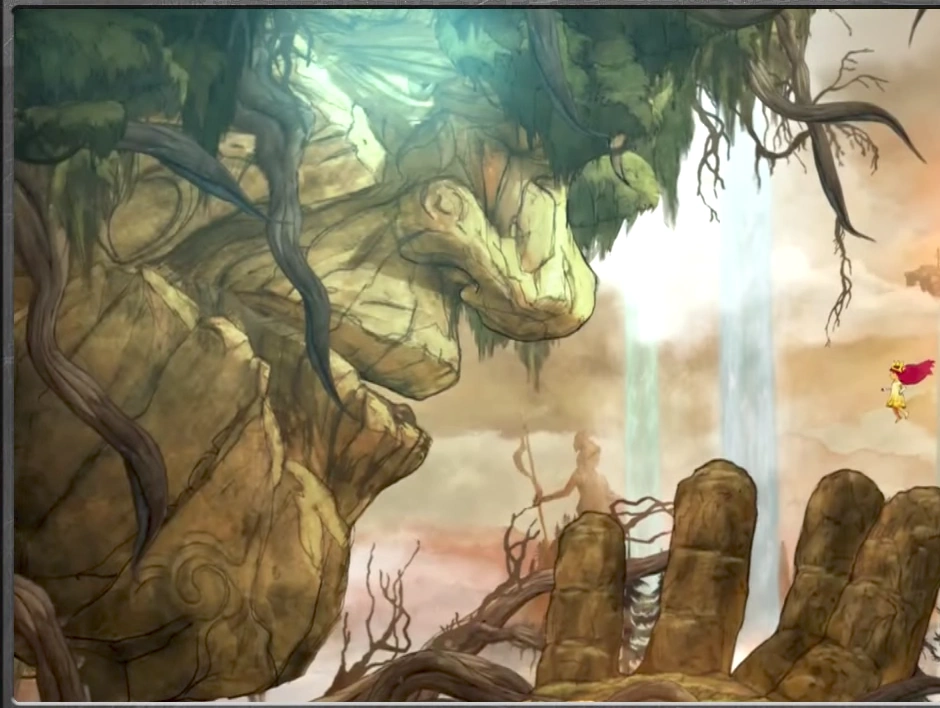
Child of Light is designed to play like a storybook, using visuals and text to achieve this effect. Its hand-painted environments are glorious, with desolation and bleakness interspersed with heartbreaking beauty. Ominous glimpses in the background turn out to be much more benign when viewed up close, such as when the giant Magna, home to a race of mouselike traders, meets Aurora for the first time: 

Image source: https://childoflight.fandom.com/wiki/Magna

The environs of Lemuria spark joy! during interactions, especially after Aurora gains the ability to fly. Her movements are graceful and her reactions to barriers well executed, like when she hits thorns or fights against howling winds.

By contrast, the story text is a bit strained. The rhyming that occurs throughout the entire game sometimes has awkward pairings, although it is pretty funny when one character consistently chooses non-rhyming words and the others peevishly correct her. It may not have detracted from the experience to have normal dialogue in between the prologue and epilogue.

Apart from the non-sick rhymes, everything else about Child of Light is divine. The soundtrack is particularly outstanding, with simple piano melodies evoking Aurora's emotions as she makes her bewildering and often melancholy journey. The princess also plays "Aurora's theme" on her flute during key moments, usually when she's trying to reach someone who is experiencing/has experienced profound loss.

Meanwhile, the combat system is like being pawed at by several kittens. Touching an enemy starts fights: a regular ol' have-at-thee, an advantage-Aurora tumble if you sneaked in from behind, or an ambush if the opposite happens. Players can have up to two characters in their active party, and can switch freely among the roster when a turn comes up. You have your standard tanks, healers, mages, and buffers. Combat is a combination of real-time and turn-based, with a bar at the bottom (the "timeline") showing each combatant's headshot marching toward their turn to act.

And this is where Igniculus the firefly shines. S/he can blind enemies, thus delaying their turn, and can also heal party members. Outside of combat, Igniculus also heals, lights up dark spaces, opens special and normal chests, is instrumental in solving puzzles, clears acne, and improves your credit score! I prefer single-player modes, but it would be super fun to do two-player and have one of my kids be Igniculus (although it's likely they'll demand to be Aurora).

Finally, the characters are terrific. Aurora grows during the course of her journey, her companions have their own arcs, and the villains are intriguing--there are hints of a complex Lemurian history that Aurora is just a small part of. She's actually my favorite person in the story, because of her let's-get-it-done attitude and compassion.

Child of Light has great pacing; it all goes at a fast clip, with sidequests easily completed. It went by too fast; I was not ready for my adventure to end. I'm used to JRPGs with epic final boss fights and then a showdown with the final final boss, possibly another fight with the secret final boss, but definitely followed by an hour of exposition and end credits. Child of Light strays from that pattern, possibly because there's no secret boss--it's clear via character design that the queen of the night is bad news, and her dismissal of the common folk doesn't help her, either.

In the end, Aurora's journey becomes much more than she imagined, and my soul is all the richer for having played this beautiful game. There's material for a sequel or even a prequel, and I am here for it. Lemuria forever!

TL;DR: Like breathing in the scent of baby hair or the top of a kitty's head.

---

This post brought to you by Juniorette banging on the keyboard as I'm writing!

Tuesday, May 14, 2019

Game Review: Valkyria Chronicles 4 (Switch)

Valkyria Chronicles 4 (VC4) is a frequently challenging military strategy game that is heavily invested in its storytelling. While very similar in terms of aesthetics and gameplay, it boasts improvements over its predecessor, 2013's Valkyria Chronicles (my review here). Overall, it's a terrific game that lives up to the standards set by the original.

Like VC, VC4 occurs during the war against the Empire, but on the chillier Eastern Front. In VC4, the protagonists are Claude Wallace and his Ranger Corps, Squad E. Squad E is charged with ending the war via a bold, decisive strike against the Empire. Unfortunately, the most powerful Valkyria, the unstable Crymaria, stands in their way, along with a tank battalion commanded by the flamboyant Klaus Walz (oh my goddess, I just now noticed the similarities in the hero name and villain name!!! Truly, VC is a series where subtlety goes to die.). Meanwhile, the twisted Lord Belgar and his "special" unit wait in the shadows for their chance to strike. Will our heroes triumph???

Of course, and it's so satisfying! Briefly, campaigns consist of positioning units, each with their own unique abilities, around a battlefield, with the perpetual goal of capturing the enemy base/s. Individual units have AP (Action Points), which is a bar denoting how far they can move afield, and they use up player CP (Command Points) when given orders. So, for example, selecting a Scout takes one CP, and moving that Scout to a specific spot will consume AP. It's all very intuitive, and once again the graphics and environment are top-notch, making battles both fun and stressful. For example, units can duck behind sand bags or crawl through tall grass to avoid damage, or evade enemy line of sight by hiding between buildings or something else suitably large. Such tactics, combined with thoughtful strategy, are well rewarded. 

I mentioned earlier that VC4 has a leg up on the first VC, and this shows up in four new gameplay elements. First is the SP (Special Point), which is a once-per-turn ability that lets your officers lead up to two other units around, which is extremely useful for conserving CP. I have spammed super-Scout Minerva many a time using this skill, using her superior range to overcome the limitations of heavier units (Grenadiers, Lancers). Speaking of, the Grenadiers are the second improvement in the game: a new unit that can destroy armored enemy units from a distance. So, like snipers, but for tanks! Third, the Squad Stories, which are earned by fulfilling certain conditions (e.g. complete X mission, finish X number of Skirmishes), are like mini-battles that give your troops more personality and enhanced skill sets! They also have ridiculous titles, like "All the Single Ladies," which is particularly memorable to me because I completely screwed the pooch on that one and finished in 10 turns instead of my typical 2-3. *blush* Anyway, the Squad Stories are definitely worth the time, and absolutely mandatory for completionists. Finally, players can equip bonus-granting items on characters, such as boots that increase AP, gunpowder that increases attack power, etc.

Amidst its strengths, VC4's most glaring weakness is the slow menu navigation. When in Book Mode, players must suffer through constant pop-up prompts: "Are you sure you want to return to Headquarters?" and page-turning sequences, and unskippable character dialogue in certain areas (e.g. the Training Field and the R&D Facility). This is a minor quibble, true, but VC4 would be near-perfect if Book Mode were snappier.

In conclusion, VC4 is a must for fans of the first VC, and for those who enjoy strategy games in general. Yes, everyone has a weirdly pointy chin and giant hands, but the campaigns will test you, the soundtrack will pump you up, and the tragic stories--from the lowliest recruit to the mighty Valkyria--will make you all the more determined to end the war once and for all. Best of all, the game portrays its antagonists in such a way that discerning players must ask the question: "Wait, are WE the bad guys?" Fenrir sure thinks so!

Fenrir is a GOOD BOY and will always be there for Crymaria and her exposed thigh!


TL;DR: Addictive, get yours today!

---

This post brought to you by spring allergies! *shakes fist* POLLEEEEEENNNNN!!!

Sunday, February 24, 2019

Game Review: Xenoblade Chronicles 2: Torna: The Golden Country


Xenoblade Chronicles 2: Torna: the Golden Country is a terrific prequel to the wildly excessive Xenoblade Chronicles 2 (my review here). As a reminder, XC2 centers on the salvager Rex and his quest to bring Pyra/Mythra, the ultimate Blade (sentient weapon), back to her creator on Elysium. Rex's companions face off against Malos and Jin, two powerful Blades bent on world destruction. Torna occurs 500 years before the events of XC2, and focuses on Jin and his beloved Driver (weapon wielder), Lora, as they become embroiled in Malos' campaign against the world . Along the way, they are joined by Prince Addam of Torna and Emperor Hugo of Mor Ardain.

The standout feature of Torna is its gameplay, which is far, far superior to the bloat of its predecessor. It's as if a million voices cried out...and the developers listened. First, the combat system has been overhauled. The camera angles are now entirely reasonable, and it's possible to see when combos are happening. And this time, combos are easier to execute and they look amazing! Second, having only six Blades is a vast improvement over the ridiculous number players deal with in XC2 (28 unique Blades plus dozens of common ones). Third, Torna tells a tight story and limits it to only two locations: the kingdom of Torna and the perpetually-contested territory of Gormott. Finally, Torna eliminates the annoying Merc Missions element of XC2, instead linking side quests to the Community feature. Points two and three cut down playtime by about a million hours.

Meanwhile, Torna's characters are all endearing. Mythra, Malos' counterpart in the all-powerful Blade department, is newly awakened here, and much more standoffish and perplexed by human behavior than 500 years later. She's also wearing tights, which is sensible and slightly mitigates all that mid-boob exposure.

Athleisure, Aegis style.

Mythra's Driver, Addam, is a tall, handsome prince with a constant smile, and IMO far better than Rex. In XC2, Blades keep talking about how Rex reminds them of Addam, and they're out of their minds. Addam is smart, charismatic, and always calm. Rex is emotional, reckless, and dresses like a steampunk clown. Maybe the Blades are referring to their genetic link, since Rex is a descendant of Addam?

Anyway, the other Blade-Driver relationships are great. The Jewels of Mor Ardain, Brighid and whatsisface, are back to guard yet another boy emperor, while Haze joins Jin in accompanying sweet Lora. Minoth sticks to Addam. Minothis actually also the Blade of Amalthus, the villainous long-armed smurf who awakens Malos in the first place and infects him with his hatred of humanity. Minoth avoids Amalthus as much as possible. Which begs the question: if people know that killing the Driver reduces the Blade back to his/her crystal core state, why hasn't anyone killed Amalthus??? I get it, he has rank in the Vatican-equivalent of the game, and he's pretending that Malos broke free from his control, but a truly solution-oriented hero would've stabbed him and been like, Fixed it!

Moving on: Torna is fairly light thematically, choosing to concentrate on bonds/relationships, and this is the only area where it pales compared to XC2, which explores the existential crisis of beings reborn again and again with no memory of their past. And since this is the story of how Jin turns to the dark side, it ends up being heartbreaking, with gut-wrenching post-final battle scenes that explain why Mythra consented to being sealed away for centuries. The game also ends with the ominous arrival of the group responsible for Jin's fall.

Finally, Torna's soundtrack is incredible. For example, whereas XC2 combat gives a mosh pit vibe, in Torna, fighting is accompanied by a jazzy, synth- and piano-heavy track ("Battle!"). I could listen to it on loop all day. The rest of the music is beautiful, especially mournful pieces like "Desolation" and "The Power of Jin."

Overall, Torna succeeds as a standalone game because of its compact story, setting, and characters. While it's not necessary to have played XC2 before Torna, doing so drives home the glaring weaknesses of the previous game. It's like having a too-heavy meal and then getting a dessert with balanced flavors--you appreciate the latter more for having experienced the former. 

TL;DR: A baby JRPG worth playing, especially if you want to skip the main game.

---

This post brought to you by jet lag!

Wednesday, November 28, 2018

Game Review: Xenoblade Chronicles 2 (Switch)

Xenoblade Chronicles 2 (XC2) is a massive JRPG that outdoes its sprawling predecessor by adding more, more, more! While it has its share of flaws, XC2 offers so many delights that it's already absorbed 150+ hours of my free time. To put that into context, I usually take 80 hours to 100% complete a JRPG. To quote from Brokeback Mountain: "I wish I could quit yew."

Briefly, XC2 tells the story of Rex and Pyra and their quest to reach Elysium, a paradise in the sky. Rex is an earnest young salvager who conscientiously sends his earnings back home, while Pyra is a mild-mannered and sweet-tempered "Blade," or living weapon, which can be wielded by a "Driver." During their journey, the pair encounter various colorful playable and non-playable characters, formidable monsters, and a group called Torna that wants Pyra's power for its own destructive goals.

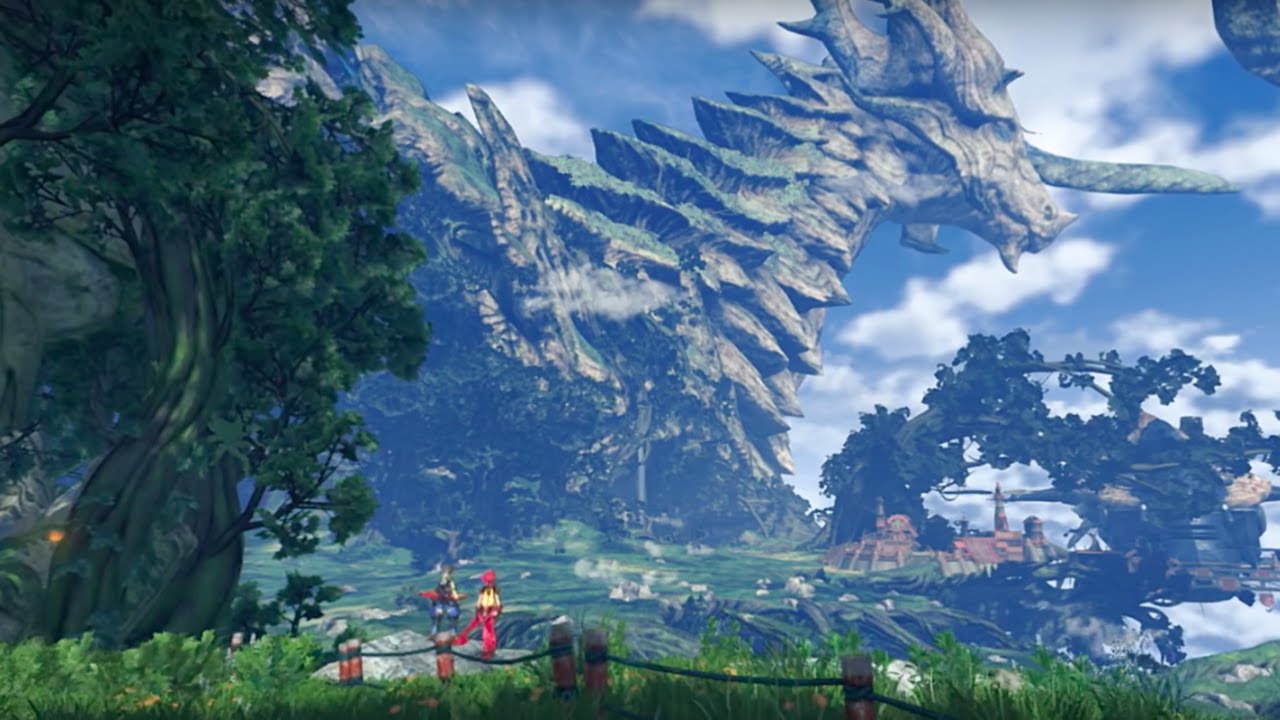
Like the first Xenoblade Chronicles, XC2 achieves epic scale through, well, scale: the game takes place on a world called Alrest, which consists of the "Cloud Sea" and continent-sized Titans that house all living organisms, including humans, etc. Running around on a giant being while essentially being a microbe evokes a feeling of wonder, an impression helped immensely by the game's outstanding visuals. Of course, the story is appropriately grand, with the world itself at stake, as usual. What starts out as a rather obvious allegory for climate change and humanity's decline becomes an examination of existence.

Image from gamingbolt.com

Of course, love and friendship make every journey worthwhile, and here XC2 performs very well. Every character is my favorite; I simply can't choose one! The playable characters all have an arc and demonstrate a broad range of emotions and reactions. For example, Rex goes from determined to self-doubting to implacable, while Nia learns to trust, without ever losing her signature snark. Meanwhile, their Blades are loyal, loving, and absolute beasts on the battlefield. And the villains are equally engaging, with motivations and histories that turn them into complex, nuanced, and even tragic figures.

But the best part of XC2 is unquestionably its soundtrack. The musical styles run the gamut: hard rock spurs combat; operatic swoops underscore majestic vistas, slapstick twangs mark humorous interactions; and more! I particularly like "Counterattack" and "Kingdom of Tantal (Day)," but the rest of the OST is so good that I don't mind listening to it on repeat. Kudos to Yasunori Mitsuda, et al for yet another excellent body of work.

The tracks perfectly accompany the fabulous cut scenes, which feature a lot of outstanding fight choreography. The voice acting is top-notch, of course, although I can only speak for the Japanese track, which I switched to early on. I did like the UK accents that I heard before the switch!

Now let's talk about some questionable decisions the developers made. The internet is rife with grumbling about the bloated gameplay (here's one example, from Kotaku). Indeed, XC2 is...very extra. This becomes glaringly apparent during combat and sidequests. In combat, there are Driver combos, Blade combos, Fusion combos, Specials, chain attacks, etc., and while players can master these with practice, the absolutely terrible camera angles ruin the fun. I've gone through countless battles where I deliver a devastating blow, and the camera inexplicably focuses on someone's feet or legs. Why? Why?

The aftermath of combat is also a hot mess. Defeating enemies causes money or items to drop, and players have to run around scooping them up. But! If the enemy is, say, an aerial creature that has to be fought over a cliff, say goodbye to your prizes! Rrrrgh! To say nothing of salvaging rare treasure chests, only to lose your chance to open them because an enemy five levels higher got pulled up too. Kyaaaa!

As for sidequests, there are hundreds of them, if you include the Merc Missions, which is how you raise your Blade's Trust levels and max out their affinity charts to unlock special combat skills and Field skills, which are needed to access buried treasure, secret locations, and possibly the cure to cancer. Merc Missions also increase the development level of the various countries you visit, as do talking to NPCs, buying lots of goods at stores, and becoming the owner of said stores. So simple!

The character designs of certain rare Blades have also been dragged (e.g. see this hilarious article about boob monster Dahlia), although I personally have no issue with them. Yes, main character Pyra is in booty shorts, and it took me about 20 hours of gameplay to become inured to her big boobs (which she keeps calling attention to by clasping her hands in front of her chest), but you know what, she's the Aegis, she can wear whatever she wants! Besides, dear Nia is there for contrast, with nary a centimeter of skin showing below the chin.

50% skin vs. 0% skin

And anyway, Rex is the most ridiculously dressed, since he looks like a goddamn blue clown, pardon my French.

Save the world with these clown feet

Let me end with this gripe: the RNG (random number generator) system for acquiring one of the 28 rare Blades is frustrating. In the game, core crystals can be "resonated" with to acquire Blades. There are common, rare, and legendary core crystals, and, as their names suggest, the corresponding likelihood of resonating with a rare Blade. But in practice, it all boils down to chance. To pluck from my own experience: I got KOS-MOS after spamming 44 common cores, T-elos and Perceval from a single common core each, and Zenobia from a combination of common, rare, and legendary. Again: why? Why??? (Actually, this video explains those mechanics pretty well.)

In any case, the fact that I'm still playing XC2 is testament to its strengths overcoming its weaknesses. The characters are great, the story has a good twist, the themes of relationships, self, and memory are thought-provoking, and the music is spectacular. Although I've finished the game and can move on to New Game+, I still have four rare Blades to acquire, and my current rare Blades' side quests to complete. Then, and only then, will I put this game down. Unless some kind person gives me the DLC Torna: Golden Country *cough*Christmasgift*cough*

TL;DR: Flawed but fun, interminable yet addictive! Recommended for non-casual JRPG fans!

---

This post brought to you by lentil chips!

Friday, March 23, 2018

The Legend of Zelda: Breath of the Wild (Nintendo Switch)

The Legend of Zelda: Breath of the Wild (BotW) enthralled me. It's the most absorbing game I've ever played, and it's so immense that I marvel at how all of it was crammed into the Nintendo Switch. It deserves all the praise and awards and tributes showered upon it. It's the best Zelda game ever.

One of BotW's strengths is the freedom it gives to players. It adheres to the core of The Legend of Zelda--that Link and Zelda must defeat the evil Ganon--but otherwise largely allows players to decide how and when to achieve that goal. Let loose in a post-cataclysm yet gorgeous Hyrule, I initially dutifully followed the "Main Quest" instructions, but then got sidetracked by, well, Hyrule.

I shall now fangirl over the best parts of the game.

HYRULE! Hyrule is the MVP of the game, every inch of it begging to be explored. Link can climb anything, although he falls if he runs out of stamina. Also, he'll keep slipping when it rains, which happens regularly. This ability to go anywhere affords players astounding views of snowy fields littered with buried treasure, imposing cliffs, a simmering volcano, inviting beach communities, and other tantalizing locations. Looming in the center it all, and frankly being a total buzzkill, is Hyrule Castle, where Zelda and Ganon remain locked in a 100-year battle. This is where Link must go to complete his adventure.

But why hurry, when hidden Koroks wait to be uncovered and plundered for their seeds? Surely Zelda can wait for Link to receive the blessing of all 120 monks in their shrines, some of which are a devil to find in the first place! And Ganon can certainly chill in the castle for a little longer while Link recovers his lost memories of his beloved princess, as well as the Master Sword tucked deep in the Lost Woods. Also, as the legendary hero, Link definitely has a responsibility to assist all the NPCs who throw sidequests his way! Oh, plus the Great Fairies are positively languishing in their fountains, won't someone help them? And, and, and those dragons flying around at specific times in particular locations are important, right?

In other words, Hyrule has so much to offer that each player crafts his/her unique BotW adventure. The game only railroads players for a brief time in the beginning, with the paraglider quest and the visit to two locations related to the Main Quest ("Destroy Ganon"). After that, the world is yours! My own journey focused on the "Free the Divine Beasts" quest, which took me to the Zora (home of the delectable Prince Sidon), past Akkala's perpetual autumn foliage, through scorching Eldin, up into the home of the Rito, and then to the Gerudo desert. I encountered fellow Hylians on the road and in the many stables dotting the land, and of course Beedle the traveling salesman, a Zelda standby since Windwaker.

GAMEPLAY! The gameplay is another highlight in BotW. Link is an expert swords-elf, and he never levels up. Instead, he must find increasingly powerful weapons and armor to help in battles against the many monsters roaming Hyrule. In the beginning, all he gets to fight with are tree branches and the occasional axe, but better fighting tools await as he explores more of his world. Link can store and use melee weapons (swords, clubs, etc.), bows and arrows, and shields. All of them break after some use, so Link must constantly replenish his supplies. And there are so many ways to do so! Arrows can be retrieved, weapons and shields can be stolen from enemies or found in chests, or are just lying around for the enterprising hero.

THE ARMOR! And the armor, oh the armor! There are so many sets to discover and mix and match. My own personal go-to is the complete Climbing Gear set, because climbing, but when faced with opponents I would switch to the amber earrings (defense up) and the top and bottom of the Barbarian set (attack up). There's also Zora armor for swimming, Rito clothes for cold weather, a rubber suit (?) so Link doesn't immediately die in a lightning strike (Hyrule has fierce storms!), and of course, a voe outfit to get into the women-only city of Gerudo.

Clockwise from bottom left: Zora armor, Armor of the Wild, Rubber Suit, voe costume, Climbing set, Rito set, Barbarian set.

COMBAT! Meanwhile, the combat system is consistent with all other Zelda games--the the hack-and-slash, of course!-- with some snazzy defensive and counter moves thrown in. In particular, the flurry strikes, which trigger when Link performs a perfect dodge, helped me survive many a battle with Lynels, the wicked fast half-horse, half-lion beasts. Combat is fun because of the variety of enemies, who react sensibly to being smacked: they fight back immediately or, if unarmed, run for their weapons or throw rocks. There are the bokoblins; the bigger Moblins; the Stal, skeletal enemies who only come out at night; the giant Talus and Hinox monsters; and the guardians, autonomous laser-firing units. I was so very proud of myself when I mastered the shield counter for guardians, which reflects their beams back at them. Hah!

Let's talk about the blood moon mechanic. In BotW, a red moon will at times show up in the sky, and Zelda's solemn voice will intone, "The blood moon rises." And all the enemies Link vanquished will resurrect! This can be inconvenient, such as when I just slew a Molduga (a giant under the sands, a la Dune) and then the blood moon made its appearance. I just went ¯\_(ツ)_/¯ and killed it again, its guts have medicinal properties, you know! The blood moon also showed up in my battle with Malice-Ganon, though I fortunately whomped him before it fully rose (whew!). I personally didn't mind this gameplay feature, since I am happy to run roaring into battle against evil. So.

CONTROLS! The controls are smooth and efficient. Link can quickly switch between weapons, shields, outfits, and rune abilities. For example, I could be swimming in my Zora armor, hit a cliff, and change quickly into my climbing gear to scale it. Or I could be wandering around, run into an icy foe, and immediately bust out a fiery weapon or arrow to deal with it. Controlling Link is a dream.

COOKING! Link can make up dishes by throwing ingredients into a cooking pot. Players can use fruit, meat, fish, insects, and even monster parts to create meals or elixirs that restore hearts or produce an effect like stealth or heat resistance. My best dish consists only of one giant radish and one Hyrule herb--it completely restores health and adds three hearts! By end game, that was all the healing I needed. I also cooked a lot of attack- and defense-boosting dishes.

***

PSA 1: To earn rupees mid-game, mix 4 prime meat and 1 rock salt. The dish can be sold for 180 rupees each. This approach worked for me because my Link was vegetarian, so I had almost 100 unused prime meat in my inventory.

***

HORSES! Link can tame the horses he encounters, and register up to five at stables. If you happen to leave a registered horse somewhere far away, just go to a stable, request another horse, and they'll take in the one left behind. I admit that I didn't use my horses much, since it was more fun to climb, and I missed a lot when I rode. This is probably the weakest aspect of BotW, because in other games Link could just whistle and Epona would come galloping up. In BotW, horses aren't magic. So sad.

SIDE QUESTS! The game accommodates all types, since Link can do what needs to be done at a pace and manner of the player's choosing. Players can even avoid combat altogether! Side quests are a joy because there are no time limits. And, having just played Ys VIII, where quest solutions are literally marked on the map, I'd say BotW's approach, which is to only show players the location of the quest giver, is better because of the challenge. My favorite quests are the ones involving Kass, a Rito bard who sings riddles that, when solved, reveal a shrine. I also liked building Tarrey Town!

***

PSA 2: There are at least two missable side quests in the game! Both are in Gerudo town, and apparently must be triggered during the Lightning Helm quest. One is "Find Barta" and the other one is "The Mystery Polluter." 

Completionists, take note!

***

SOUNDTRACK! Finally, the music is outstanding. This game has a lot of tracks, but the main theme is memorable, as are other pieces, such as "Hyrule Castle Theme" and the one that plays whenever a dragon is nearby. I'd buy an orchestral arrangement of BotW in a heartbeat. And the sound effects are top-notch, too! In the Japanese voice version, Link has a full array of grunts, etc.; NPCs make hilarious noises; monsters are suitably roar-y; the grass is rustle-y; and so on and so forth. Well done, sound mixing team!

I could go on, but instead I'll finish with a brief list of BotW experiences that stood out for me:
  • The "Captured Memories" quest that slowly revealed Princess Zelda's personality was touching. 
  • Fighting the zebra-looking Lynel in the Hebra region. That sucker was tough!
  • All the over-the-top Great Fairy reveals! And when they pull Link into their fountains! Bwahahahaaaa
  • Completing side quests by accident! My favorite: taming the giant horse. I named him KhalDrogo. I also tamed Zelda's royal steed because I happened to spot it during a side quest. Her name was Brienne.
  • Finding the shrines within the labyrinths!
  • Obtaining Link's classic costume as the reward for going to all the shrines!
  • Zelda! In the Japanese version, she always goes, "Leeeeenk." hehe

Looking great at 117 years old!

In conclusion, The Legend of Zelda: Breath of the Wild is divine. I wish I could join Link and Zelda as they travel around Hyrule again.

"First we need to stop at Trader Joe's."

TL;DR: An enthralling gaming experience. Super mega highly recommended!

---

This post brought to you by spring! It's here, right?