Showing posts with label sci-fi. Show all posts

Tuesday, February 5, 2019

Book Review: A Discovery of Witches (2011)

A Discovery of Witches is the bougiest novel I have ever read. It's got vampire yoga, a witch with a PhD who rows and rides horses, fortresses, ancient manuscripts, MDs, tea, geneticists, helicopters, and loving descriptions of wine, so much wine! Midway through, I wondered to myself: Am I reading a trashy novel? Is this parody? Perhaps! But this book trilogy is now a UK TV series starring my boyfriend Matthew Goode, so before I watch, (nerd voice) I just want to be able to judge its fidelity to the source material.

>>> SPOILERS BELOW <<<

The novel, by US scholar Deborah Harkness, starts solidly. Readers are introduced to Diana Bishop, a young tenured Yale professor who also happens to be a witch who also happens to reject her magical heritage because of a traumatic childhood event. Diana inadvertently opens Ashmole 782, a mysterious, enchanted alchemical manuscript, which activates the Plot. The tall, dark, brooding Matthew Claremont, also a professor, also a vampire, wants that book! But witches don't trust vampires, and vice versa! WILL THE TWO OF THEM EVER OVERCOME THEIR DOUBTS AND DIFFERENCES AND FALL IN LOVE, AGAINST ALL ODDS?

Once the Love Interest comes into the picture, Diana is revealed to be a Mary Sue: a character who excels at everything. In A Discovery of Witches, Diana is an intellectual giant, athletic, and brave, so brave! Her only physical flaw--alas!--is an errant strand of hair that she simply cannot get under control! All the better for her vampire protector to, you guessed it, tuck it tenderly behind her ear! But Diana needs no protector! She is a fiercely independent woman, who got where she is with her amazing smarts and hard work and definitely not her magic! Which--double alas!--she cannot use properly*, possibly because it is an allegory for how hard it is for a woman to flex her mind muscles with all the insecure man-babies around! Only a vampire with multiple doctorates can possibly be her match!

(*Mocking aside, Diana can't use her magic because her mom saw the future, bound her against her own magic, and sacrificed herself and her husband so Diana could live. Grim stuff, but as a parent I can relate. Although my ghost would be all, i literally died for u, why u no appreciate me versus Rebecca Bishop's actively helpful apparition in a moment of crisis.)

And because Diana is all that, she earns the grudging admiration of all the non-villain characters she meets. Yes, even the dreaded vampire mother-in-law, the surly vampire brother-in-law, and the snooty vampire geneticist!

As for Matthew...I just can't with him. He's so big and strong and smart and sophisticated and devoted and so transparently a fantasy. He initially keeps away from our heroine because he has a past and anger issues but she's just so amazing that he comes to love her more than he's ever loved anyone in all his 1,500 years. He also refuses to boink Diana despite her multiple invitations. Rude!!! Also, c.f. Edward Cullen.

All griping aside, the world Harkness creates in A Discovery of Witches is a genuine joy. Essentially, there are four humanoid species: humans, witches, vampires, and daemons. Those last three are vividly described; for example, witches can cast spells and use magic (two different things!), vampires like research because of the long hours and isolation, and daemons tend to become famous/infamous because of their hyper-creativity. The non-humans try not to intermingle because it attracts unwanted attention, giving rise to taboos and bigoted ideas against the other species. But Ashmole 782, the spellbound book that Diana briefly reads, threatens to expose the (possibly common) origin(s) of all four species. Matthew's quest for the manuscript is revealed to be due to his desire to understand their beginnings, because his research in different fields all point to the eventual extinction of the non-humans. He thinks Ashmole 782 can help stop that.

Meanwhile, a group dedicated to keeping all the species apart is also keen to get the manuscript, and every single member so far has been unpleasant or downright evil. As villains go, the witches of that group have been fairly effective, with Satu the Finn being the standout for kidnapping and torture. While Diana and Matthew's adversaries appear to be stand-ins for the dangers of narrow-mindedness and hypocrisy, they also might represent ignorance? I don't know; I haven't read books two and three!

Which bring us to the best part of the novel: the mystery at the center. What does Ashmole 782 contain? Why are three pages cut out, and who did the cutting? What will the humans do to complicate the interspecies conflict, and how will it involve the daemon Nathaniel's apparently elite hacker skillz? Can Harkness write the time travel aspect in a way that makes sense? Can everyone get over Diana, or will my eyeballs roll right out of my head? I can't wait to find out!!!

On a final note, it's really fun to read about the history of science, and specifically alchemy, Diana's specialty. There are moments of wry humor throughout the book, e.g. Diana resisting the urge to type, "Book sighed" when she first opens Ashmole 782. Hopefully the other two books will have more of those, instead of the other characters fawning over the main character.  

TL;DR: Twilight with graduate degrees and more money.

---

This post brought to you by the New England Patriots' sixth Super Bowl win! :P 

Thursday, November 7, 2013

TV Series Review: Babylon 5 (1994)

Except for the graphics.

This post is about Seasons 1-4, because Claudia Christian was not on Season 5 and I call shenanigans. I said good day!

Moving on.

I acquiesced to watching this nineties sci-fi series after what I can only describe as a sustained nerd campaign by my husband. For months he would turn to me, eyes shining, and declare how much I would love Babylon 5. He would leave tantalizing hints about the Minbari and their mysteriousness. He would mention the series in casual conversation having nothing whatsoever to do with science fiction or television. His efforts received an unexpected boost when my friend Cheap Date vetted the show. I finally succumbed when he marched out his DVD collection of Seasons 1 through 4, placed them prominently on the entertainment shelf, and gave me puppy dog eyes. Dammit.

So I popped in Season 1 and was immediately treated to Ambassador Londo Mollari’s bombast. His race of big-haired aliens was at odds with reptilian ones, and only human intervention was keeping them from killing each other. Incredibly cheesy humans, prone to grandiose speeches. And then the absolutely shitty graphics kicked in, and I was entranced. It was like a train wreck…in space.

Happily, it turned out to be the opposite. Thanks to incredibly thoughtful writing, a powerful and coherent vision of the fictional universe, and some spectacular acting, Babylon 5 is an enjoyable story. It starts off slow with Season 1, which is only natural because that’s the introductory phase. Season 2 gets things going, Season 3 is jaw-dropping, and Season 4 wraps it all up in a bow.

To summarize: Babylon 5 is a neutral space station in the 23rd century headed by humans and strongly backed by the Minbari, aliens recently at war with Earth. A decade before the show starts, the Minbari surrendered on the eve of victory over Earth’s inferior technology. Why? It’s a question that has an answer, and which leads to more questions. And then there are the other aliens: the fading Centauri Republic and the angry Narns, as well as a slew of secondary races, or the Non-Aligned Worlds. Together on Babylon 5, all this diversity tries to get along as best it can. But ancient forces are awakening, and prophecies abound…

The best actors are the ones who play the alien ambassadors: Peter Jurasik, the late Andreas Kastulas, and Mira Furlan are at the top of their game, despite all the prosthetics and makeup. Their role is to project everything about the aliens dreamed up by show creator J. Michael Straczynski, and boy are they effective. Jurasik’s Mollari is so sympathetic that viewers root for him despite all the crap he pulls, while Kastulas’ G’Kar constantly simmers with barely repressed rage. As Delenn, Furlan is often doe-eyed and restrained, but when she gets an idea in her head, she’s unstoppable. Many of the Crowning Moments of Awesome in this series involve soft-spoken Delenn plowing through the poor fools who think their way is better than hers.

Of the human protagonists, only the late Richard Biggs shows range and charisma. The rest of the main command staff—Bruce Boxleitner, Michael O’Hare, Jerry Doyle, and Claudia Christian—are wooden or cheesy. This is especially true for Boxleitner, who plays the Captain of Babylon 5. He basically just coasts on his generic good looks. Meanwhile, Doyle is saved by having an interesting character in Security Chief Garibaldi. O’Hare is so cheesy he should be slathered on a pizza, at least on Season 1.

I do suspect that Commander Ivanova’s perpetual stick-up-the-ass expression may have just been Christian playing true to character as an ambitious career officer with too much emotional baggage, a suspicion bolstered by her wrenching performance in the second to last episode in Season 4. Girlfriend dropped the mic right there.

Now the human antagonists--Walter Koenig of Star Trek just killed it as the Psi-Cop Bester. He was a villain's villain. But everyone else was cartoonishly evil. Meh.

All in all, Babylon 5 did a great job with casting. The supporting characters are brilliant. Minority actors are everywhere, which I guess is the point, since Babylon 5 is about holding all sentient life sacred and not letting differences get in the way of moral and technological progress. The script often presents two opposing ideas, each one plausible, but in the end, victory always veers toward those who hear the higher ethical calling. Well, eventually, anyway. Part of the reason the series is so great is that the characters have to go through so much, so it's a YAY! moment when they're vindicated.

Morality and technology are big themes here, as are the horrors of war, and decisions and consequences. There are a ton more, which I won’t cover because this post is already too long. I’ll just end by saying that sustained nerd campaigns can break down even the most stubborn resistance, so learn and live, my fellow nerds.

This post is brought to you by National Men Make Dinner Day! National Men Make Dinner Day: because holidays made up for retail purposes are fun! Just ask Jesus! 

Friday, June 8, 2012

Movie Review: Prometheus (2012)

Prometheus is a great yarn. If you haven't seen the trailers, the story goes: scientists discover ancient cave paintings that point to a location in space. They convince a corporation to fund their mission to go there, and off they go on their merry way. And then [REDACTED]

Spoiler jokes aside, here are what make this film epic: the amazing CG (we watched it in 3D), the tensions between the crew of the Prometheus, and the horrific discovery(ies) that lie in wait. Dun dun DUNNN! The characters who matter were well developed. In particular, the character played by Michael Fassbender, my secret lover (so secret he has no idea), stayed on my mind throughout the elephant car ride home.

I think the best thing about Prometheus is the questions it raises. What would you ask your creator? How far would you go to get those answers? And most importantly, what is this wiggly black stuff and is it a new and interesting way to die?

Yes. Yes, it is. Go see it. It's worth it. 

Thursday, October 13, 2011

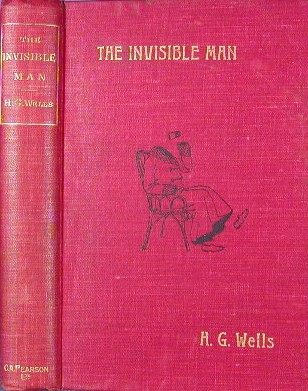
Book Review: The Invisible Man (1897)

Type: Older than dirt science fiction.

The Skinny: English towns are terrorized by the Invisible Man.

The Science: Light refraction. A body that does not absorb or reflect light will be invisible.

The Main Character: The Invisible Man.

The Plot: A curious man arrives in a small English village. Soon after, a rash of thefts occur, turning the villagers against the stranger. He flees and forces a hobo to be his ally, and they go through towns stealing money. The hobo steals the Invisible Man's precious science journals. While hunting for the hobo, the Invisible Man (real name: Griffin) stumbles upon an old school chum, who promptly contacts the police. After a long, involved manhunt, the Invisible Man eventually gets taken down.

The Twist: The Invisible Man is a jerk. He's rude, violent, and by the end, murderous.

The Interpretation: Running the experiment on himself made him go insane.

The Counterargument: He was a jerk even before he did the experiment. He stole money from his dad, driving him to suicide.

The Cool Part: Invisibility = anonymity + irritability = internet trolls, modern variants of the Invisible Man!

Lesson Learned: To find an invisible opponent, sprinkle all paths with salt, then follow the blood trail!

Monday, June 22, 2009

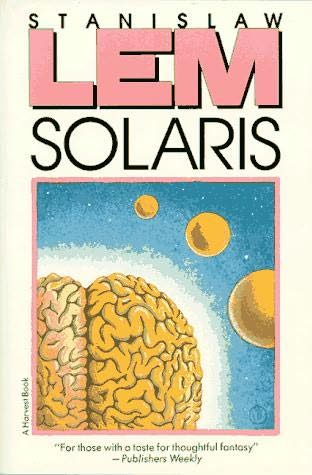
Solaris

I love Solaris. I read it during my 2-day trip to Bangladesh. This Polish sci-fi novel takes place on a space station located above and dedicated to the study of the planet Solaris, which is covered with an "ocean" that appears to be a massive conscious entity. The scientists on the station find themselves being "studied" by the ocean -- but who can tell what the motives are of this particular alien? Perhaps it was taking revenge on them for using high levels of energy to test it, or perhaps it was mindlessly pulling out their repressed memories for no reason whatsoever. The point is that it's an alien, and we can't understand it, and we don't even understand ourselves.

Lem points out that people don't go out into space to look for aliens; we venture into space to look for mirrors, for ourselves. This novel was written in the sixties, and so at the very start of the space age Lem captured the theme of human self-preoccupation.

The other thing amazing about this novel is the absolutely fantastical depictions of the constructs that the ocean creates, and the designations that pioneering scientists have made for the observable ones. On this note, Lem also describes the infighting among scientific circles almost along religious lines, like schisms forming among churches. There would be leaders who would define a certain school of thought, which would be published, and then others would come and prove it wrong, and there would be another school of thought, and so on.

The main plot centers on the psychologist, Kelvin, whose dead-by-suicide ex-lover appears to him on the space station. [SPOILER ALERT] He eventually comes to understand that this construct is not the original, but he loves her anyway, despite her inhuman tendencies (superhuman strength, physical inability to remain apart from him, and almost limitless regenerative capabilities). I found her sympathetic as a character because she cares for him, but then she was specifically made to, and she realizes this and is horrified by it. She also reacts to his horror at her existence, and in the end [MAJOR SPOILER ALERT] works with another scientist to end her pseudo-life. Or is it actual life? After all, she was developing a personality...

As a final point in my review -- the author mentions the incredible amount of data and raw material accumulated throughout the years of studying the ocean, and still its nature and purpose remain unclear. Just like us. So in the end, we will always find a mirror in space.

Btw - here is what Lem has to say about his own novel, as a reaction to the latest film version (from Hollywood): http://english.lem.pl/index.php/arround-lem/adaptations/soderbergh/147-the-solaris-station